.webp)
Written by:
High Mountain Moving Team
Published:
September 30, 2026
Learn the best way to pack a sofa for moving, from measuring doorways to wrapping cushions, so it arrives at your new home without rips, stains, or dents.
The best way to pack a sofa for moving is to measure it against your doorways before moving day, strip off any removable cushions and legs, wrap the frame in a breathable moving blanket, and seal it with plastic wrap only over the blanket, not directly on the fabric. Skipping any of those steps is how sofas end up scraped through hallways, stained by rain, or stuck sideways in a doorframe while everyone stands around arguing about angles. A sofa is bulky, awkward to grip, and expensive to replace, so it deserves more prep than tossing a sheet over it and hoping for the best.
Here's how to get it out of your old place and into your new one in the same condition it left in.
Sofas get damaged more than almost any other piece of furniture because they're heavy, hard to see around while carrying, and rarely fit through doorways at the angle people first try. Most damage happens in the first ten feet, not on the truck.
Fabric snags on door hardware and stair railings. Wood legs crack when a sofa gets tipped onto them to clear a tight turn. Corners get dented when it's set down without padding on a hard floor. And upholstery absorbs whatever it touches: dirt from a driveway, moisture from a wet ramp, or grease from a mover's gloves. None of these are exotic failure modes. They happen because a sofa is treated like a big cushion instead of a piece of furniture with real weak points.
Measure the sofa's height, depth, and diagonal length, then compare that against the width and height of every doorway, hallway turn, and stairwell it has to pass through. Do this days before moving day, not while the sofa is already stuck in a frame.
The diagonal measurement matters most. Most sofas that "don't fit" actually do fit, just not straight on; they need to go through at an angle, sometimes tipped onto one arm. If your measurements show it's close, plan now to remove the door from its hinges or take the sofa's legs off rather than finding out mid-move that it's wedged at a 45-degree angle in a stairwell.
If the sofa's diagonal measurement is within a couple of inches of the doorway opening, pull the door off its hinges ahead of time. It takes ten minutes with a screwdriver and removes the single biggest reason movers get stuck partway through a doorway.
Prep means removing anything that can come off, cleaning the surface, and protecting the floors you'll be sliding it across. Do this before a single moving blanket goes on.
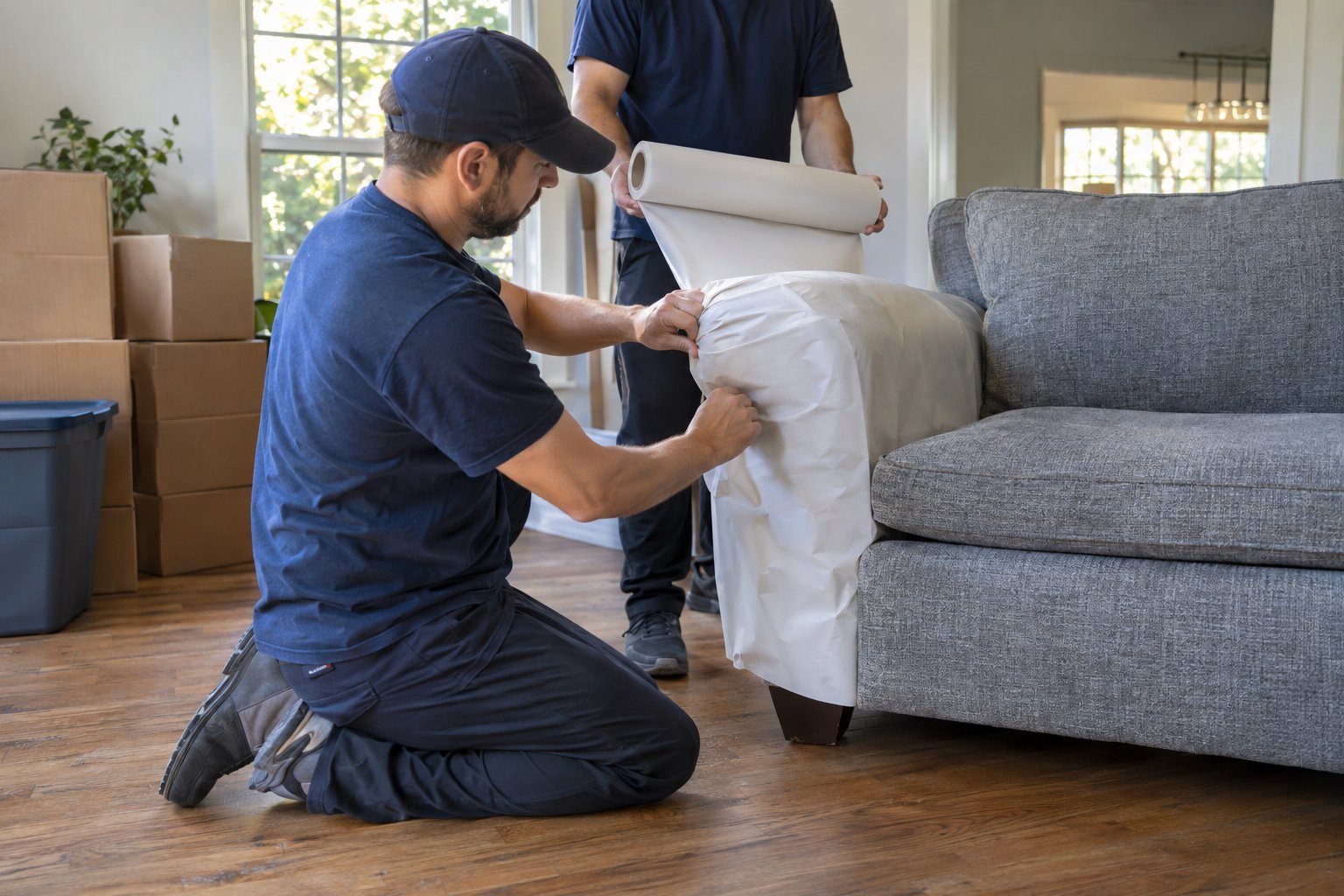
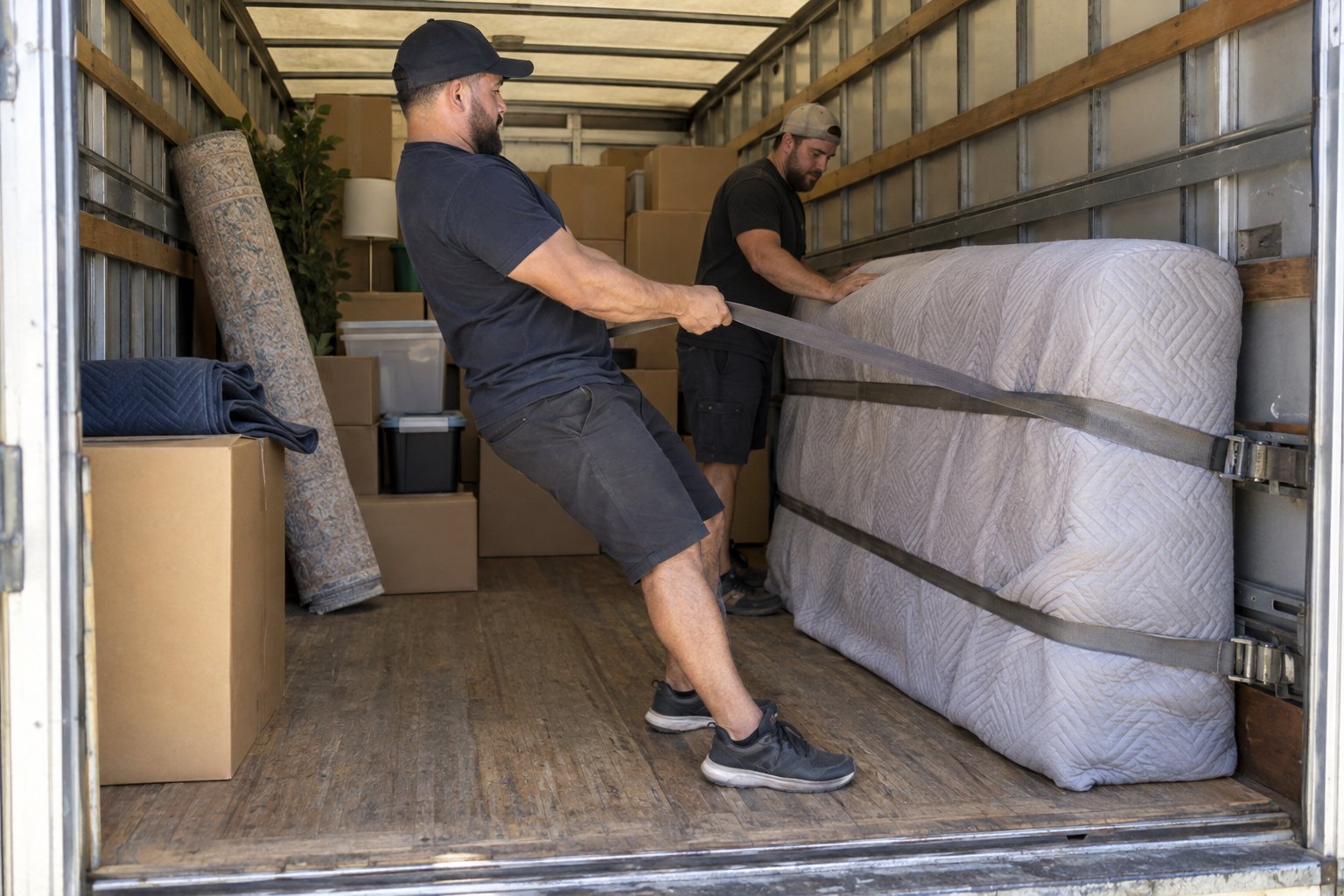
Wrap the frame in thick moving blankets secured with tape or stretch wrap, then add a layer of plastic stretch wrap over the blankets, never directly against the fabric. Plastic touching upholstery traps moisture and can cause mildew or discoloration, especially on a multi-day move.
Work in this order: cover the arms and back first since they take the most impact against doorframes, then wrap the base. Secure blankets with painter's tape or packing tape applied to the blanket itself, not the fabric underneath. For leather or suede sofas, skip plastic wrap entirely if you can; a snug moving blanket alone breathes better and won't cause the material to stick to itself in heat.
Lay furniture sliders or old moving blankets on hardwood, tile, or laminate floors along the path you'll carry the sofa. Dragging a wrapped sofa, even a few feet, can scratch finished flooring or crack tile, and lifting it fully for the entire route usually isn't realistic for two people.
Break a sofa down into separate pieces when it has a modular or sectional design, when your measurements show it genuinely won't clear a doorway even at an angle, or when it's a sleeper sofa heavy enough that moving it whole risks injury. Most standard two- or three-seat sofas don't need to be disassembled beyond removing legs and cushions.
Sectionals are built to come apart at the connector brackets between pieces, which is far easier than wrestling an entire L-shaped unit through a hallway. Sleeper sofas with a pull-out frame are heavier than they look because of the metal mechanism inside; check whether the frame can be lifted out to reduce weight before attempting a full carry. If a sofa still won't clear an opening after removing legs and cushions, the frame itself may need to be partially disassembled, which usually means removing screws at the arm joints rather than forcing it through.
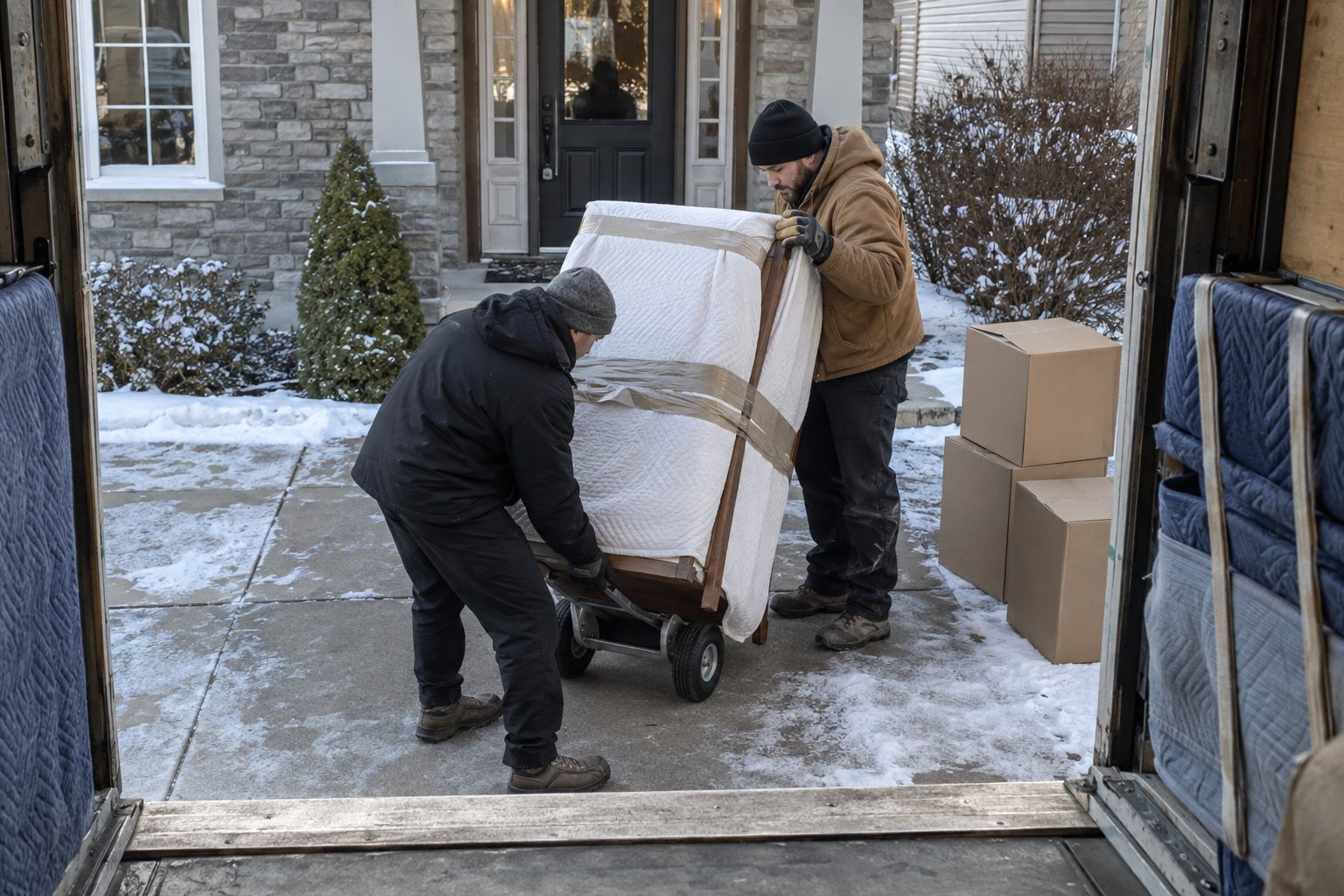
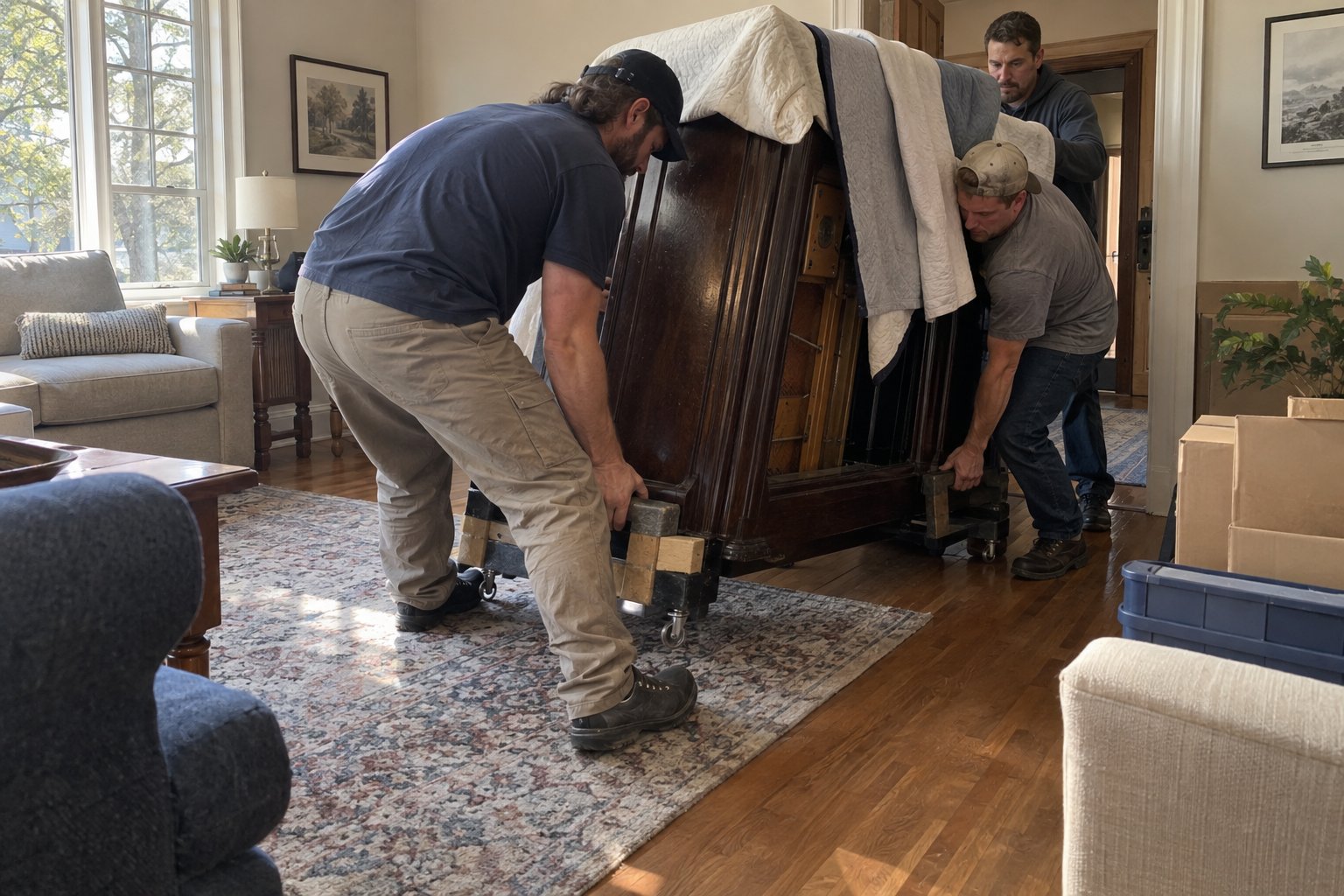
Professional movers are worth it for sofas that are heavy, awkward-shaped, or need to travel through a tricky floor plan, because they carry the right equipment and know how to angle a load without guessing. A sofa is one of the pieces most likely to cause a back injury or a damaged doorframe when handled by two people without the right technique.
If you're moving a sectional, a sleeper sofa, or any piece that barely clears your doorways, it's worth having a team handle it rather than risking the frame or your floors. High Mountain Moving's packing services include the wrapping and preparation described here, so fragile and bulky items like sofas are handled by people who do it daily rather than once every few years.
Unwrap the sofa as soon as it's inside the new home rather than leaving it wrapped in plastic overnight, since trapped moisture can settle into the fabric or frame. Set it in its final spot before removing all the padding if possible, since repositioning a heavy sofa twice is harder than doing it once.
Check the legs are reattached evenly so the frame doesn't sit at an angle, which over time can stress the joints. If you notice any new marks or tears compared to your pre-move photos, document them right away rather than waiting.
A sofa is usually just one piece of a much bigger packing job. If you're mapping out what else needs protecting and in what order, our moving prep checklist covers the rest of the household so nothing gets left to the last minute. And if your move includes a sectional, sleeper, or oversized piece you're not confident handling alone, get a moving quote and let a crew that handles this weekly take it from here.
Two people can usually move a standard two- or three-seat sofa if they remove the legs and cushions first and use furniture sliders on hard flooring. Sectionals, sleeper sofas, and anything that barely clears a doorway are safer with a third person or a professional crew.
Plastic wrap should only go over a moving blanket, never directly against the fabric, because trapped moisture under plastic can cause mildew or discoloration. Leather and suede pieces often do better with just a blanket and no plastic at all.
Measure the sofa's diagonal length and compare it to the doorway opening; most sofas that look too big actually fit when tipped onto one arm at an angle. If it's still tight, removing the door from its hinges usually solves the problem.
Removing the legs is recommended whenever they unscrew, since it lowers the sofa's overall height and removes the part most likely to snap if the frame gets tipped or set down hard.
Carrying is safer for the floor, but if the sofa is too heavy to lift the full distance, furniture sliders under the legs let you move it without scratching hardwood, tile, or laminate.
From Durango to communities across Southwest Colorado, High Mountain Moving is here when you need reliable residential, commercial, or long-distance moving services. Request your free quote today.