Written by:
High Mountain Moving Team
Published:
October 21, 2026
Learn how to protect furniture and floors on moving day with the right pads, wrapping, and floor coverings, so nothing gets scratched, scuffed, or stained.
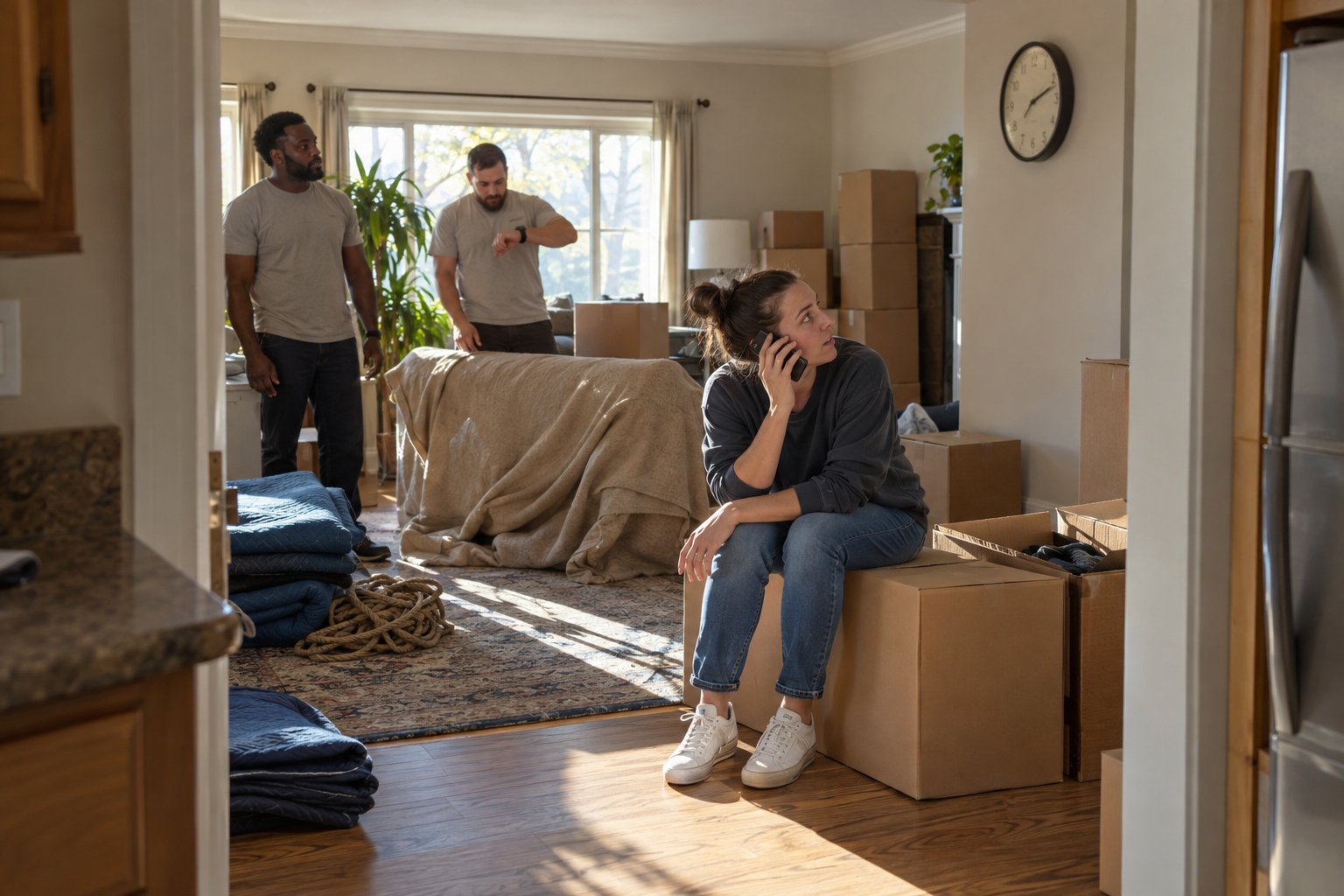
You protect furniture and floors on moving day by covering every hard surface with blankets or pads before anything gets lifted, laying down a path of floor protection along the route you'll actually use, and keeping corners, door edges, and stair nosings covered the whole day, not just during the big items. Most of the damage on a move happens in the margins: a dresser corner that clips a wall on the third trip, a dolly wheel that leaves a black streak across a hallway nobody thought to cover. The items themselves usually survive fine. The house and the furniture's finish are what take the hits.
This is less about buying expensive gear and more about setting up protection before the first box leaves the house, instead of reacting once something is already scratched.
Most damage comes from friction and impact in narrow, repeated paths: the same doorway, the same turn in a hallway, the same spot at the top of the stairs. It's rarely the one big item everyone is careful with. It's the twentieth box carried too fast through a space that's already a little too tight.
Hardwood and tile floors get scuffed by dragged furniture legs and grit trapped under shoes. Walls get dinged by corners of dressers and mirrors swung too wide. Furniture itself gets scratched when it's set down on bare floors, stacked without padding between pieces, or rubbed against door frames while being carried. Once you know where the damage actually happens, it's easier to protect the right spots instead of spreading effort too thin.
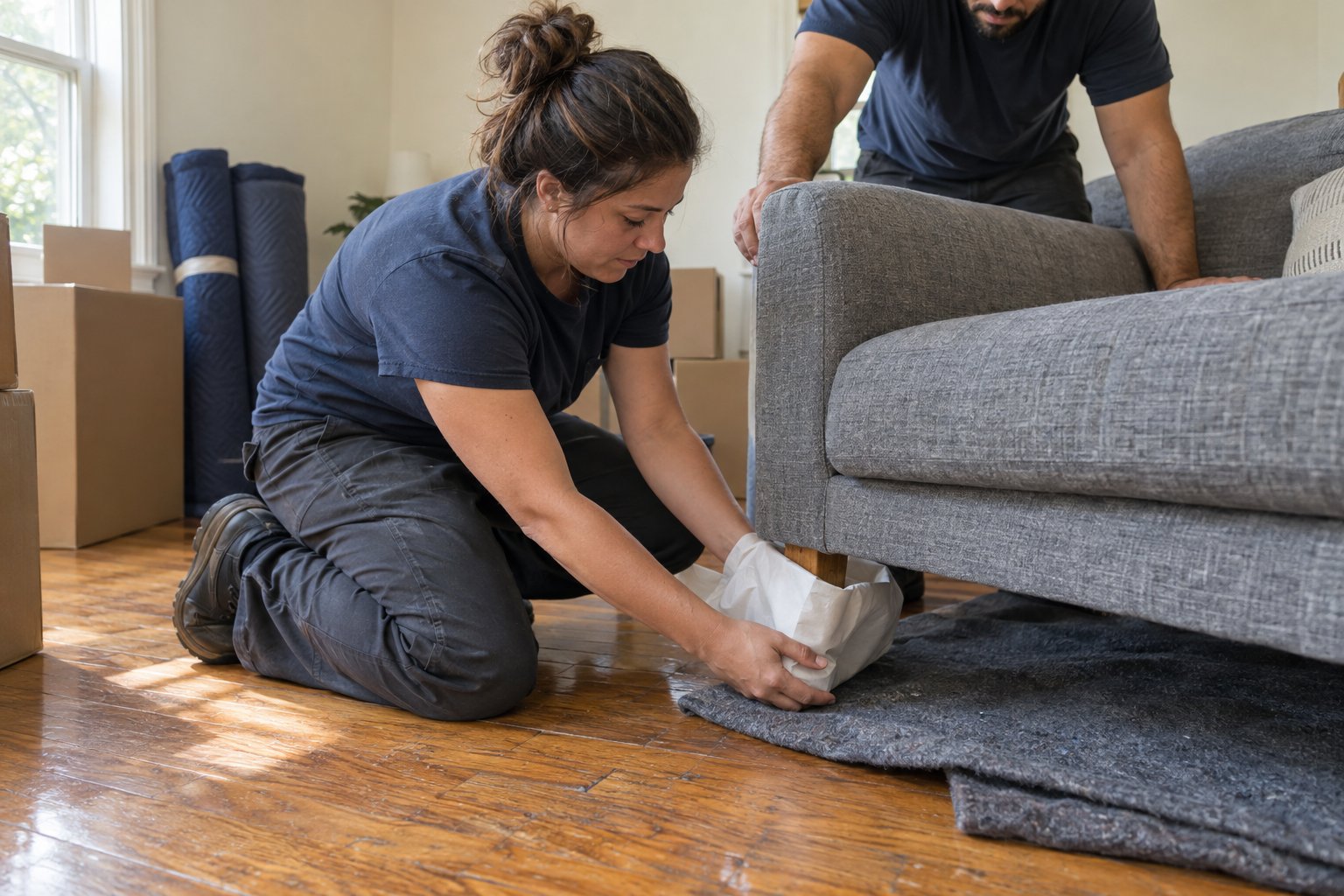
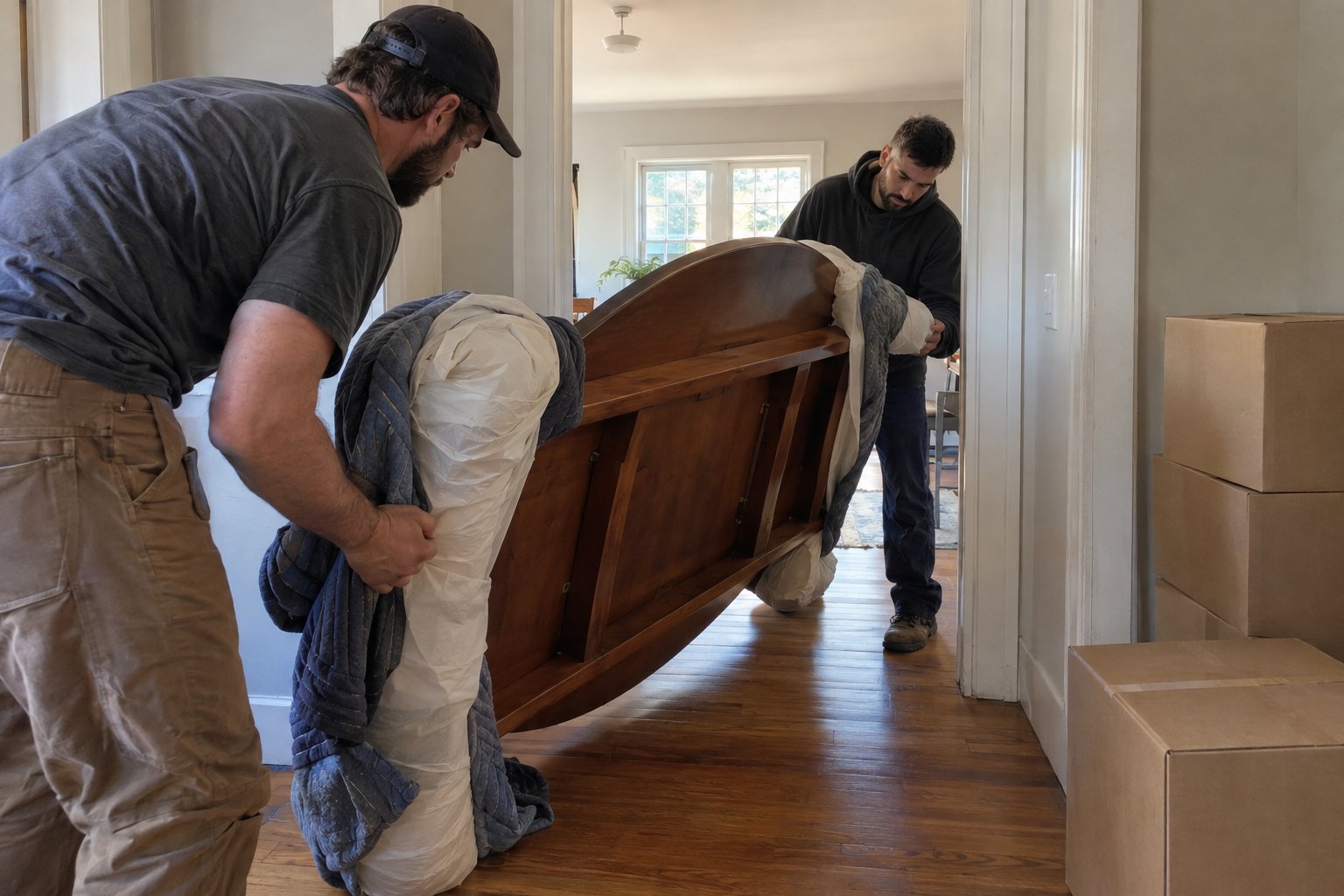
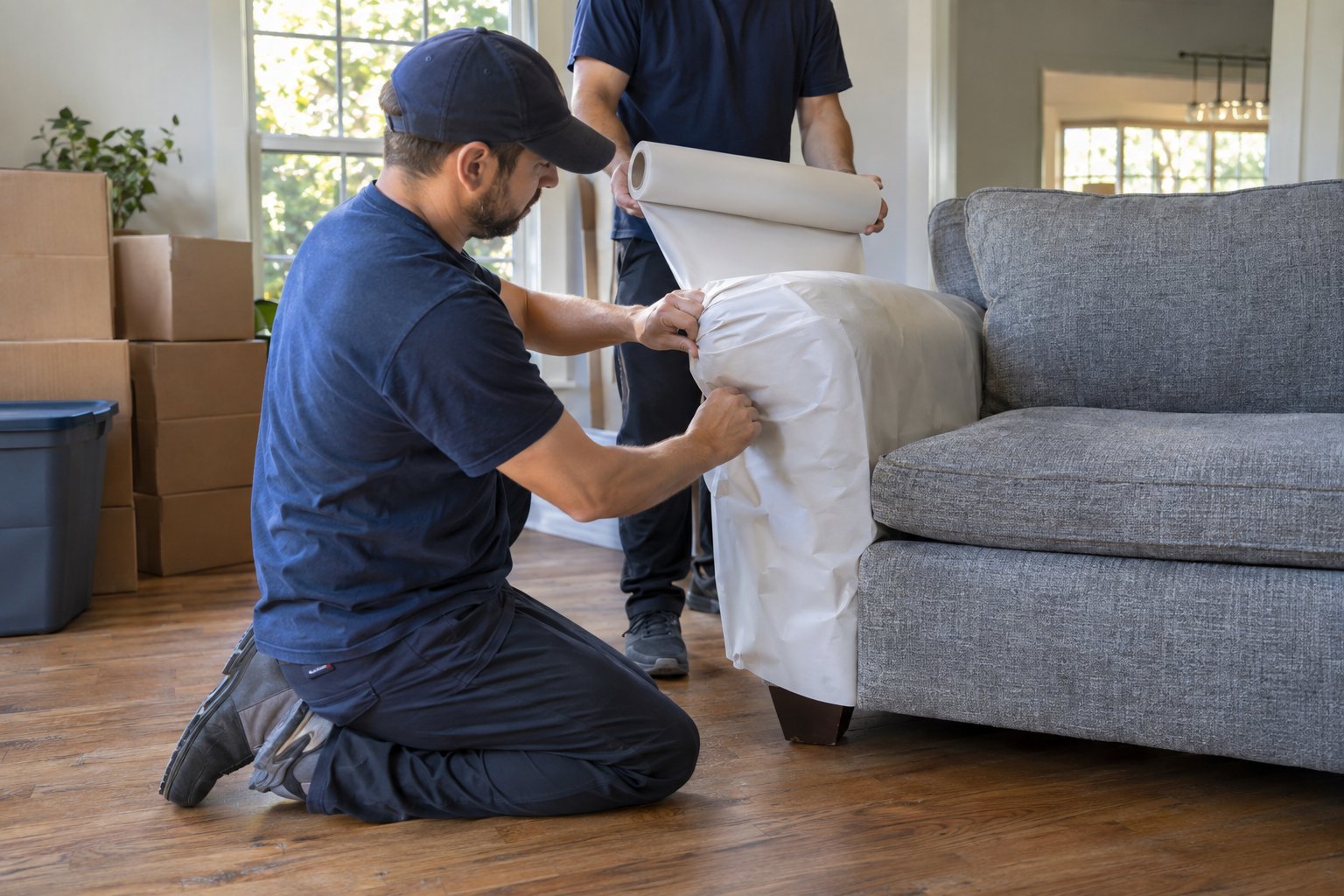
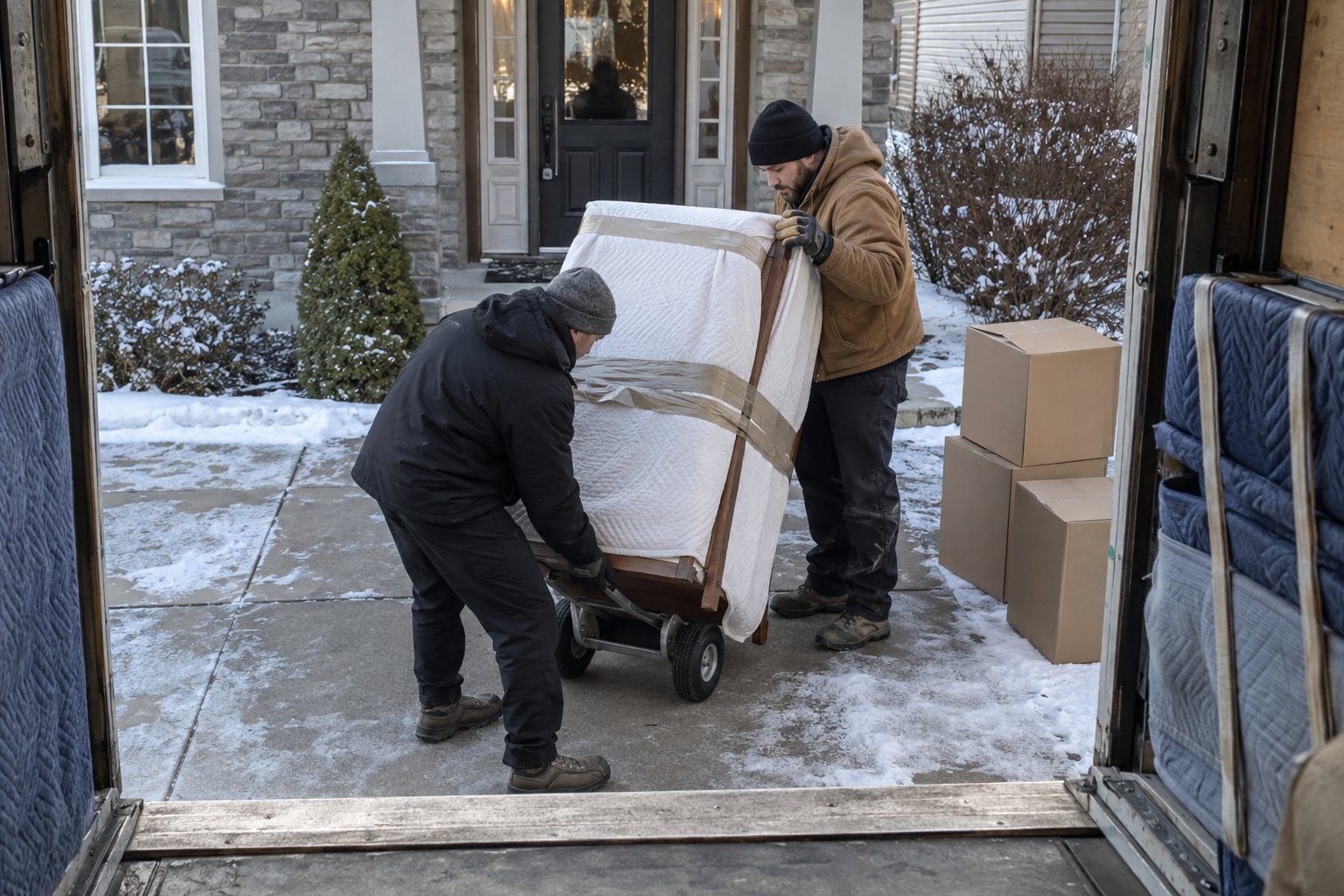
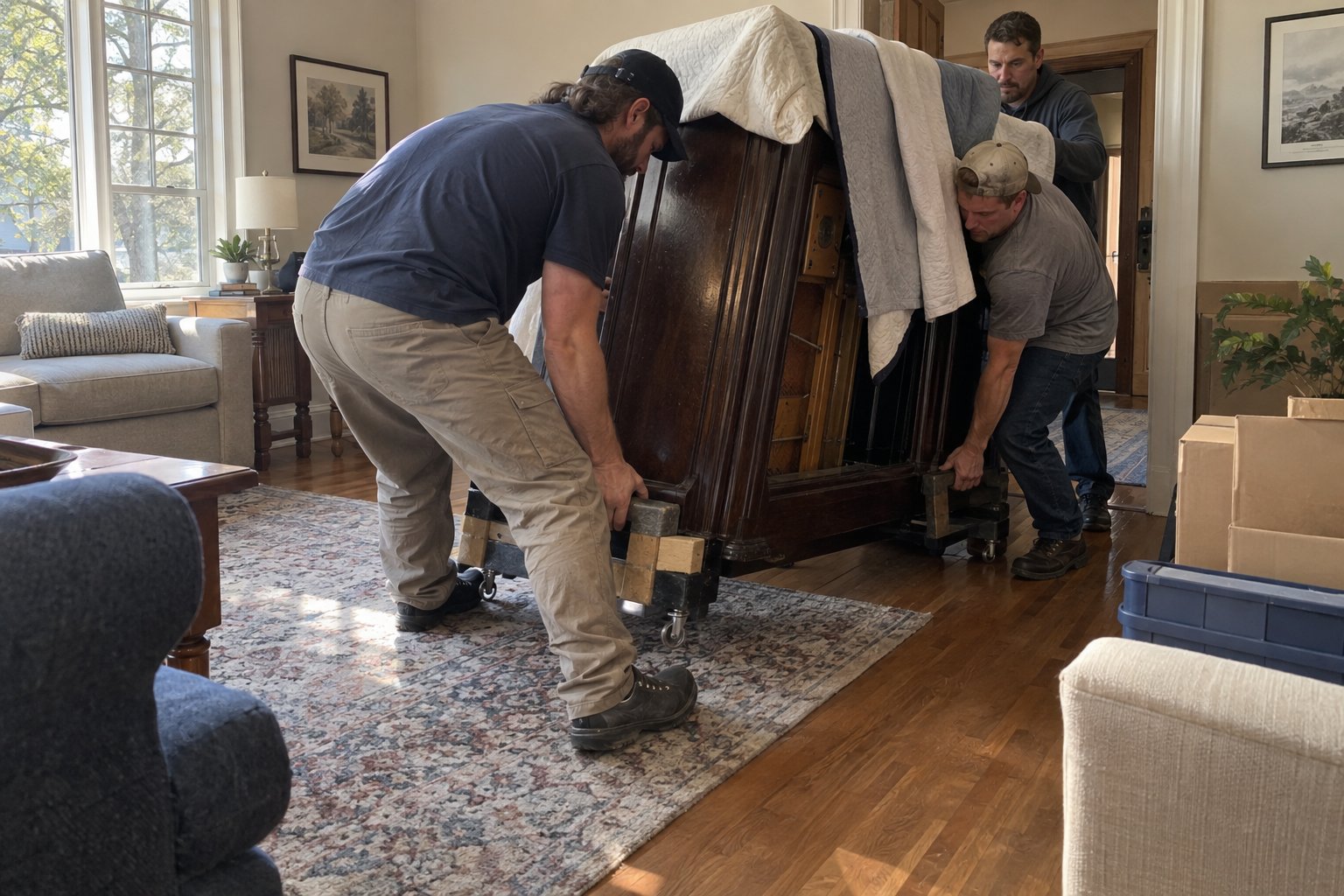
Wrap each piece in a moving blanket or furniture pad and secure it with stretch wrap over the blanket, never directly against the finish. This keeps corners, legs, and tabletops covered during every carry, not just the trip to the truck.
Focus padding on the parts that make contact with doorways and other furniture: corners, edges, and legs. Wood and leather pieces benefit most from a full wrap, since both finishes scratch and dent easily. For upholstered furniture, a breathable blanket protects against dirt and minor scuffs without trapping moisture the way plastic wrap alone would. Stack only padded surfaces against each other in the truck, and never set a wrapped piece directly on pavement or gravel, where grit can work through the blanket.
Thicker quilted furniture pads hold up better over multiple trips and corners than thin blankets, which tend to slip or bunch. If you're moving a large household in one day, pads are worth the extra cost for anything with a finished wood or glass surface. Blankets are fine for shorter, lighter moves or softer upholstered pieces. If a piece needs to come apart before it can be padded and carried safely, our furniture assembly service handles the disassembly and reassembly end of that so the frame itself stays wrapped and protected the whole time.
Lay down floor runners, ram board, or heavy cardboard along the exact path movers and boxes will travel, from the front door to the truck and through every interior hallway involved. Tape it down so it doesn't slide underfoot, and extend it past doorways where dollies tend to pivot.
Hardwood and tile are the most vulnerable to scuffing and cracking under dropped furniture legs or dolly wheels. Carpet protection film works well for high-traffic runs and keeps mud and grit from grinding in during a multi-hour move. If you're moving in wet or snowy conditions, put a mat just inside every exterior door so shoes get wiped before tracking across any protected surface.
Stairs deserve their own attention because they combine a narrow path with heavy, awkward loads. Cover stair treads with non-slip protective runners, and make sure nosings (the front edge of each step) are covered, since that's where corners of furniture tend to catch.
Pad the door frame itself with a blanket or foam corner guard anywhere furniture has to pass at an angle, and measure big pieces against the opening before you try to force them through. A few seconds of measuring prevents the gouges that happen when someone assumes a piece will clear and it doesn't.
If a doorway is close to the width of the furniture passing through it, it's often faster and safer to pull the door off its hinges than to wrestle a dresser or sofa past it repeatedly. This is also where having an extra set of hands to call out clearance on both sides pays off, since the person carrying rarely has a clear view of both edges at once.
A trained moving crew brings padding, floor runners, and corner guards as standard equipment and knows which surfaces in a given house need the most attention before anything gets carried. That's often the difference between a move that leaves a house exactly as it was found and one that ends with a punch list of scuffs to touch up.
This matters just as much on a tight timeline. If your move needs to happen fast, our same day moving crews still set up floor runners and wrap furniture before the first item moves, so speed doesn't come at the cost of your walls and finishes.
Walk the exact path your furniture will travel, from each room to the truck, a day or two before the move, and note every doorway, stair, and tight corner along it. Buy or rent protection for that specific path rather than guessing at quantities.
A simple order that works for most households: protect floors first along the main route, then wrap large furniture before it's lifted, then double-check doorway padding once the first few pieces reveal which turns are actually tight in practice. If you're still working through what needs packed and prepped before the crew or truck arrives, our moving prep checklist covers the broader timeline this fits into.
And if you'd rather have a crew handle setup and protection from the first box to the last, you can get a moving quote and ask specifically what floor and furniture protection is included.
Ram board, heavy cardboard, or carpet protection film laid along the exact path furniture travels works best, since it resists dents from furniture legs and holds up under repeated dolly trips. Taping it down keeps it from sliding underfoot.
Regular blankets offer some cushioning but are thinner and less durable than quilted furniture pads, so they slip more easily and wear through faster on multi-trip moves. They're an acceptable backup for light or short-distance moves, not a long-term substitute.
Even a small move benefits from basic floor protection at doorways and along the main path, since most damage happens from repeated trips over the same spot rather than total volume moved. A few runners at high-traffic points usually cover it.
Lay down floor runners or ram board under the full width of the dolly's path and check the wheels periodically for trapped grit, which is what actually causes most of the scratching. Soft rubber-wheeled dollies also help compared to hard plastic wheels.
Mats just inside every exterior door work better than asking a moving crew to remove shoes all day, since they catch the grit and moisture that cause most scuffing without slowing down the move. This matters even more in wet or snowy conditions.
From Durango to communities across Southwest Colorado, High Mountain Moving is here when you need reliable residential, commercial, or long-distance moving services. Request your free quote today.