.webp)
Written by:
High Mountain Moving Team
Published:
October 14, 2026
Learn how to move a table safely: measuring doorways, removing legs, protecting tabletops, and the lifting technique that keeps floors and walls scratch-free.
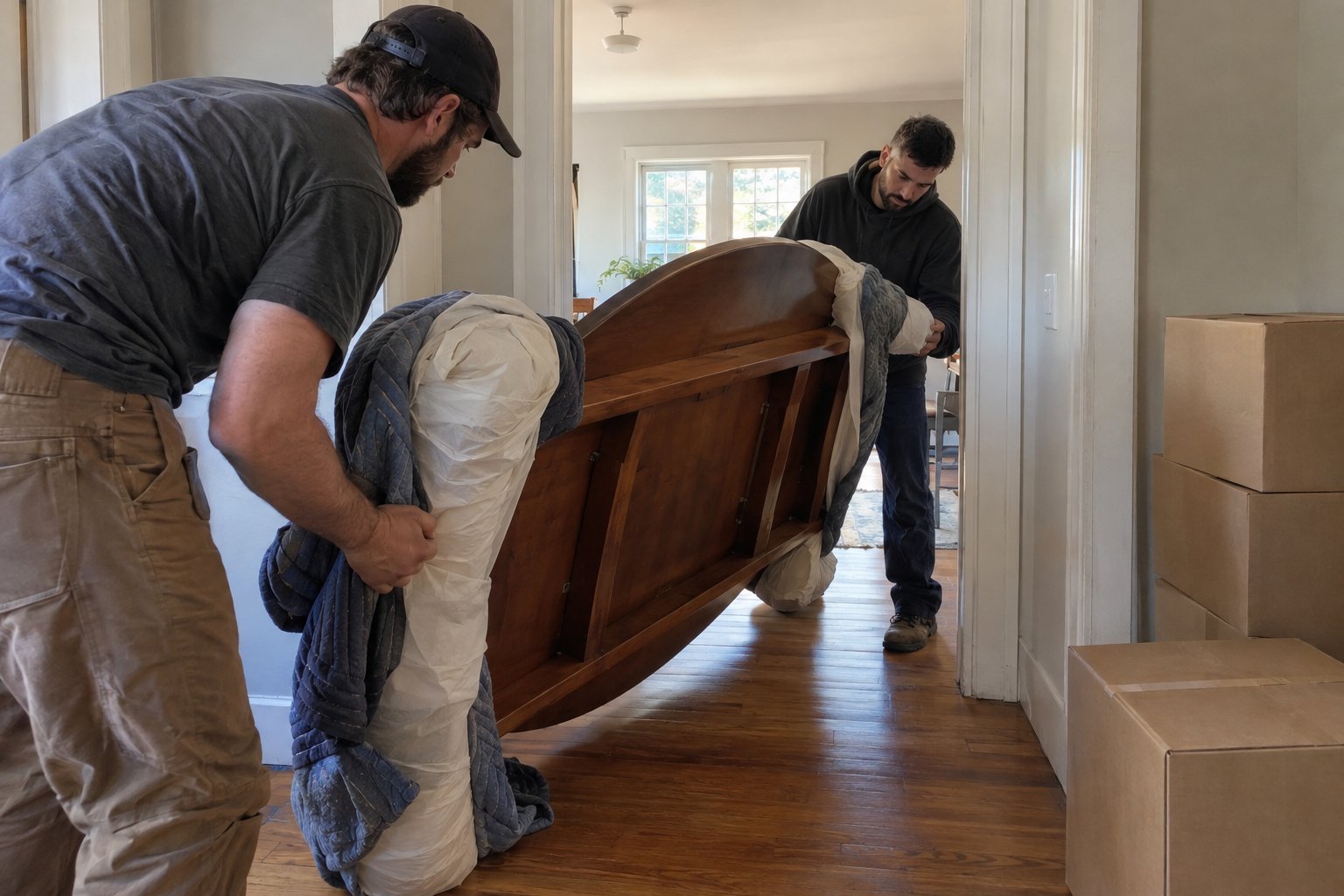
The best way to move a table is to clear it completely, remove the legs or leaves if the design allows it, measure it against your doorways before you lift it, and carry it on its side with one person at each end rather than dragging or tilting it through tight spaces. Tables aren't especially fragile, but they're awkward: long, flat, heavy in the middle, and just wide enough to find every doorframe in the house. Most of the damage people cause moving a table comes from rushing the first ten feet out of the room, not from the truck ride.
Here's how to get a table out of a house and into a new one without a gouge in the drywall or a crack in the tabletop.
Tables get damaged because people try to move them fully assembled, at an angle, through spaces that weren't built for a four-foot-wide object. The legs catch doorframes, the top scrapes ceilings on stairwells, and the weight shifts unpredictably when it's carried flat instead of on edge.
A dining table also concentrates its weight differently than a dresser or sofa. Most of the mass sits low, in a thick top or a pedestal base, which makes it top-heavy to carry flat and much more stable once it's turned on its side. Ignoring that one fact is behind a lot of the dented walls and chipped table edges we see on move-in day.
Measure the table's longest dimension (usually length, sometimes diagonal if it has a wide pedestal) and compare it against the narrowest doorway, hallway, or stairwell turn it has to pass through. If the table is wider than the doorway, you need to disassemble it or take the door off its hinges before moving day, not while you're standing in the hallway holding one end.
Round and oval tables deserve an extra look. Their widest point isn't always obvious at a glance, and a pedestal base can make them harder to tilt through a frame than a rectangular table of the same overall width. Measure twice on anything irregular.
If your measurements come out within an inch or two either way, plan to remove the door rather than gamble on angling the table through. A door off its hinges takes five minutes with a screwdriver. A cracked tabletop or a hole in the drywall takes a lot longer to fix.
Most dining tables are designed to come apart: legs unscrew or unbolt from the apron, and extension leaves lift out separately. Removing both makes the table lighter, narrower, and far easier to carry through a standard doorway without touching the frame at all.
Glass-top tables are the one exception worth calling out on their own. Never carry a glass top flat and unsupported; it should travel upright, braced between moving blankets, ideally in its own padded crate or carried separately from the base.
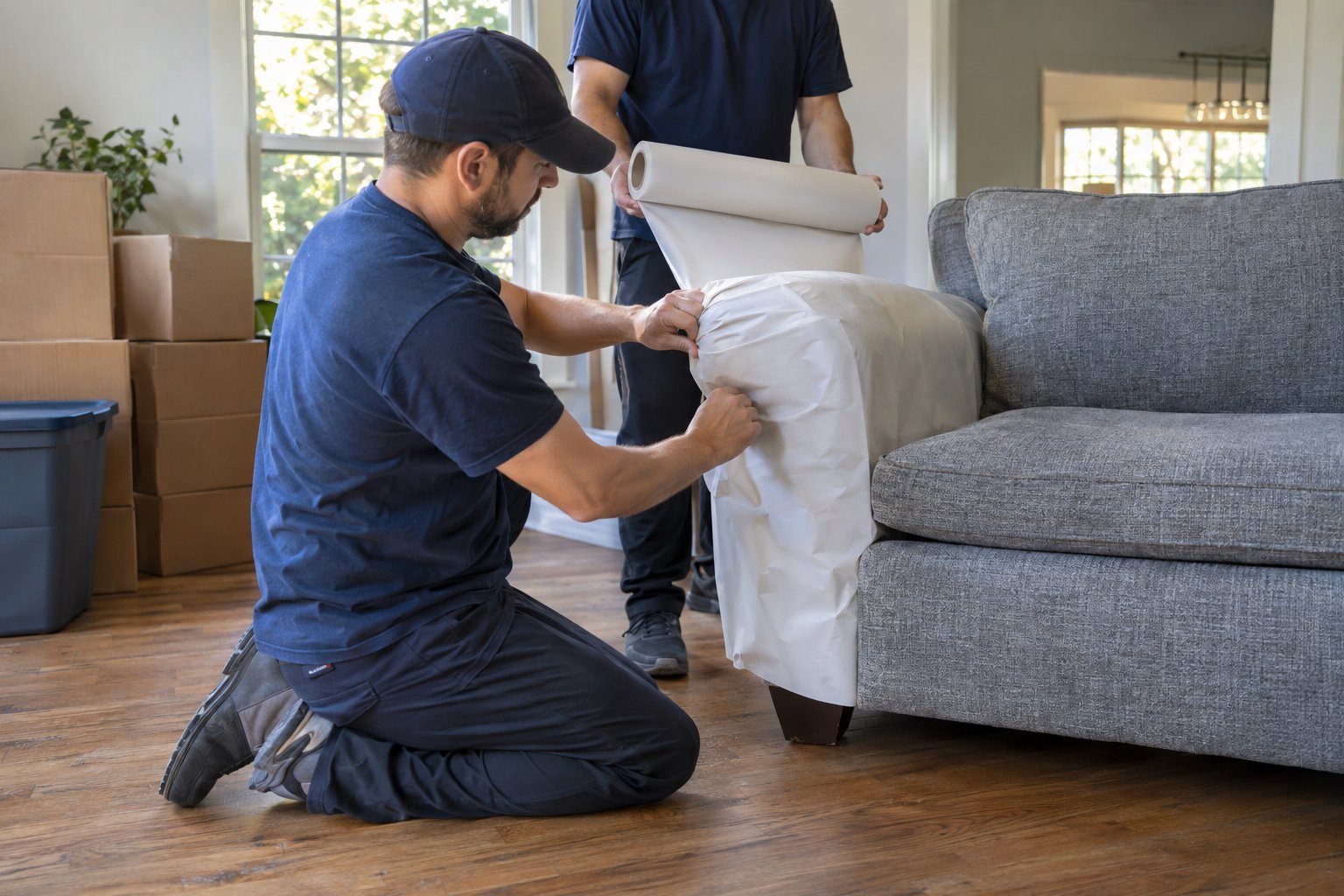
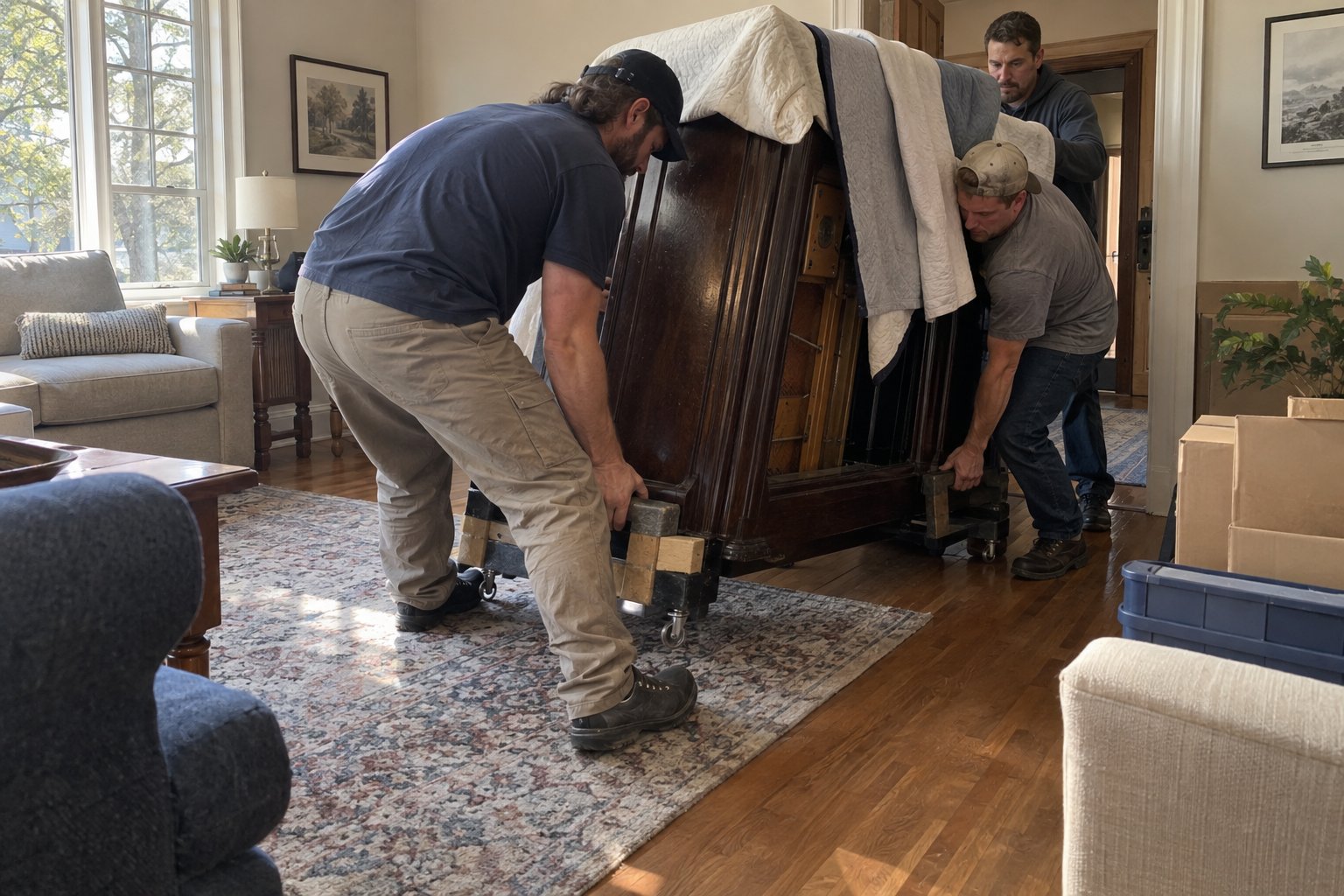
Pad every exposed edge and corner with a moving blanket secured by tape or stretch wrap (never tape directly on the wood or finish), then carry the table on its side with one person at each end, walking in step. Carrying it on its side rather than flat gives you a narrower profile through doorways and a much more stable center of gravity.
A few details that make the difference between a clean move and a scraped one:
A single small table is a reasonable DIY job if you have one other person and a few furniture blankets. A large dining table, an extension table with multiple leaves, or anything with a glass or stone top is where professional help earns its cost, because the margin for error on an awkward, heavy piece drops fast once stairs or tight hallways are involved.
At High Mountain Moving, our crews handle the disassembly, padding, and reassembly of standard furniture like dining tables and beds as part of a full move, so you're not the one testing whether it fits through the hallway. If you'd rather not add "take apart the table" to an already long moving-day list, our furniture assembly service covers exactly that step.
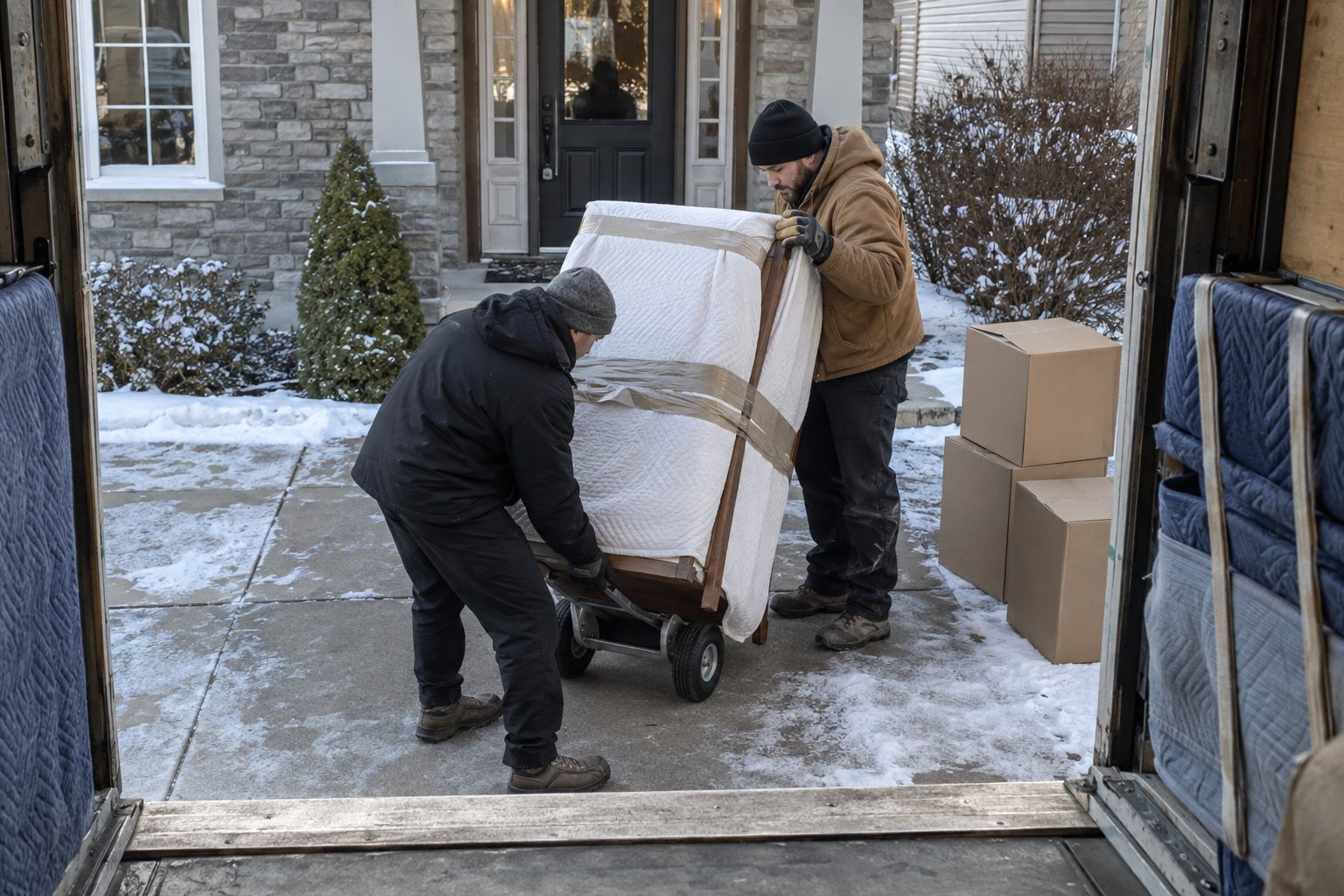
Unload the table before the smaller boxes so it isn't the last heavy item stuck behind a pile of cartons, and set it up in its final spot before reassembling chairs or unpacking the room around it. Reattach legs and leaves using the hardware bag you taped underneath, check that it sits level on the new floor, and remove the protective padding only once it's in its final position.
If you're working through a full room-by-room unpacking plan rather than just the table, it helps to decide the order you tackle each room in before boxes start piling up. Our guide on what to pack first when moving covers that sequencing for the rest of the house.
And if the table is just one piece in a larger move you're still planning, getting a written quote early gives you a clearer picture of what help you actually need on moving day. You can get a moving quote from our team before you start packing anything.
A small side table or accent table, yes, if it's light enough to carry on edge without losing balance. A dining table almost always needs two people: one to manage each end through doorways and turns, and to keep the weight from tipping onto one person's back.
Not always, but it helps on anything wider than a standard doorway or heavier than about 75 pounds assembled. Removing the legs also protects them from scratches and makes the piece much easier to wrap and stack in a truck.
No. Dragging concentrates the table's full weight on a few square inches of leg or edge, which is exactly how hardwood and tile floors end up scratched or cracked. Carry it, even for a short distance.
Separate the glass from the base if possible, wrap it with blankets on both sides, and transport it upright and braced rather than flat or stacked under other items. Flat glass under weight is far more likely to crack than glass stored on edge.
Use moving blankets held on with tape or stretch wrap rather than taping anything directly to the wood, since tape adhesive and plastic wrap left in direct contact with a finish can pull it up or leave marks over time.
From Durango to communities across Southwest Colorado, High Mountain Moving is here when you need reliable residential, commercial, or long-distance moving services. Request your free quote today.