.webp)
Written by:
High Mountain Moving Team
Published:
August 28, 2026
Learn how to pack a moving truck so boxes stay put and furniture arrives undamaged, with a loading order that actually protects your stuff.
A well-packed moving truck is not about cramming in as much as possible. It's about loading heavy, stable items first, distributing weight evenly, and filling gaps so nothing has room to shift once the truck starts moving. Get the order wrong and you risk a domino effect that can crack a dresser, dent an appliance, or crush a box of dishes somewhere on the highway.
The order you load items in determines whether your belongings stay put or slide around during transit. Trucks brake hard, turn corners, and hit potholes, and anything that isn't braced against something solid will move, sometimes far enough to tip over or fall on something fragile.
Think of the truck bed as a puzzle you're solving from the back wall forward. The goal is a wall-to-wall, floor-to-ceiling load with as few open pockets as possible, because empty space is what lets things shift. Heavy furniture goes in first to form the structural backbone, then everything else gets built around and on top of it.
Large, heavy, rigid pieces belong at the front of the truck (the wall closest to the cab) and should go in first. This includes dressers, bookshelves, sofas, mattresses on their sides, and major appliances like a washer or refrigerator.
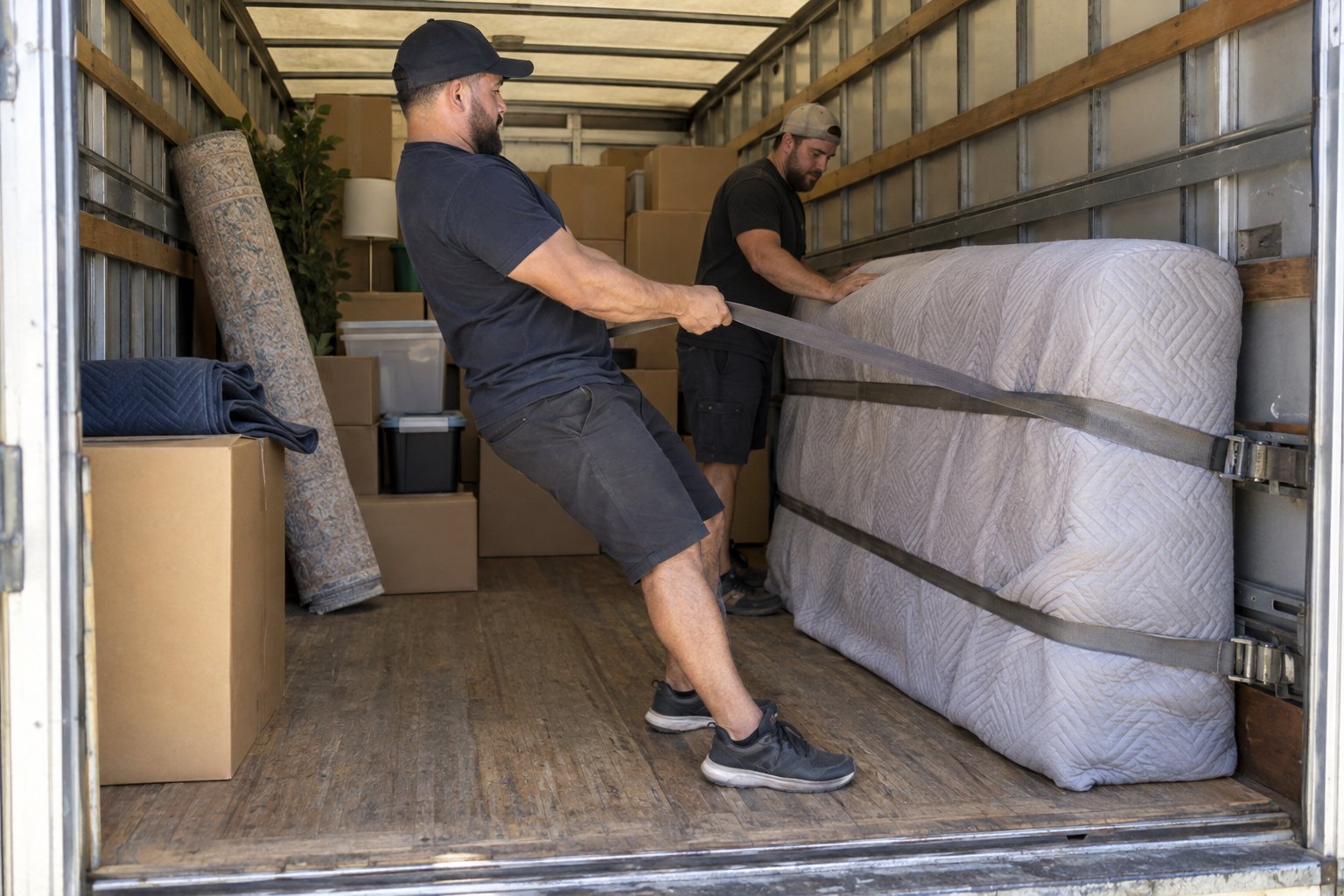
Stand flat items like mattresses, mirrors, and headboards on their edges rather than laying them flat, and wedge them tightly against the truck wall or other furniture so they can't tip. Load dressers and cabinets with their drawers still in (assuming they're not overloaded) since the extra weight low in the piece adds stability, but tape drawers shut so they don't slide open in transit. Appliances should be loaded upright and strapped to the truck's wall rails whenever the truck has them.
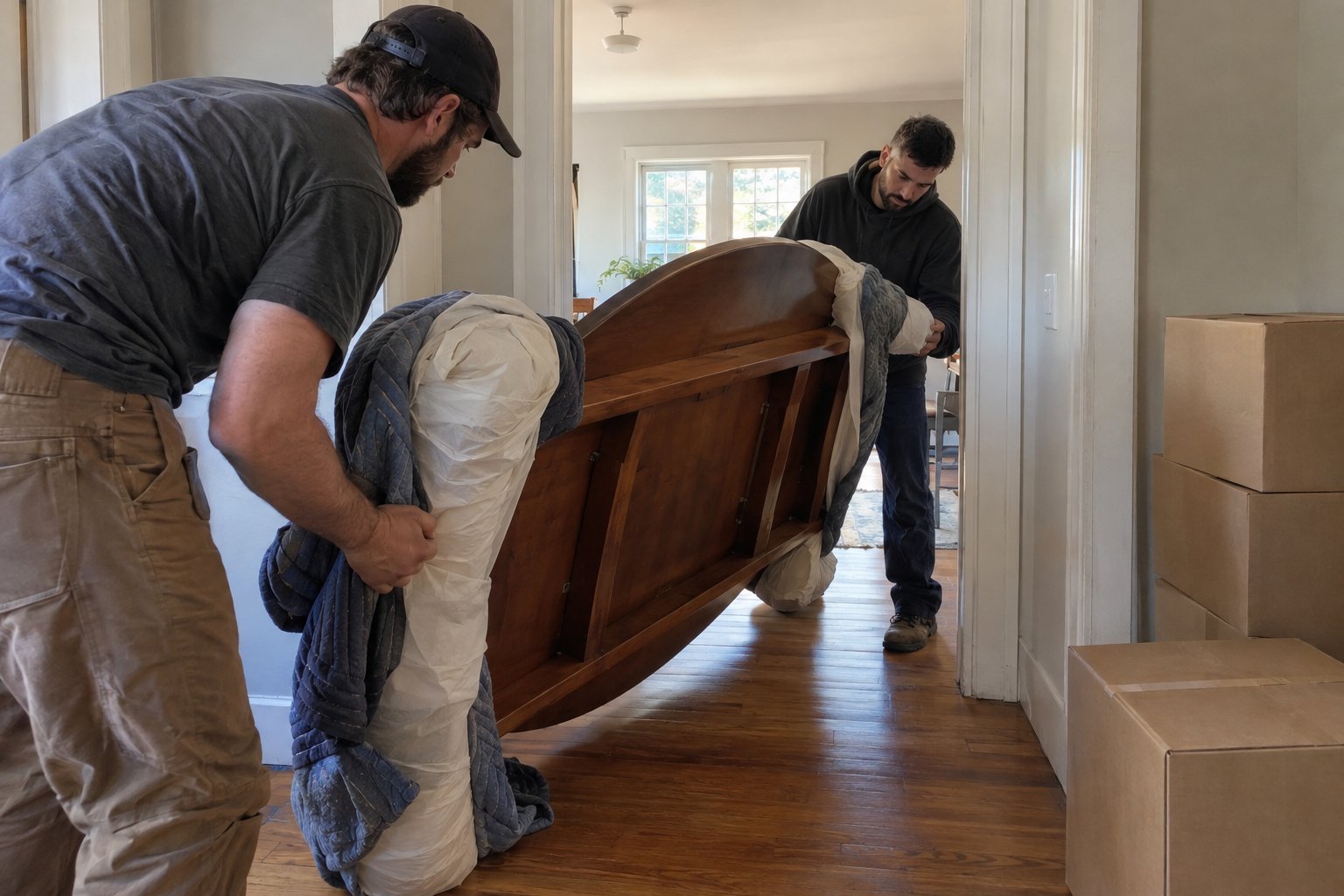
Disassemble what you reasonably can. Bed frames, table legs, and large shelving units take up far less space broken down, and flat parts stack much more efficiently than assembled ones.
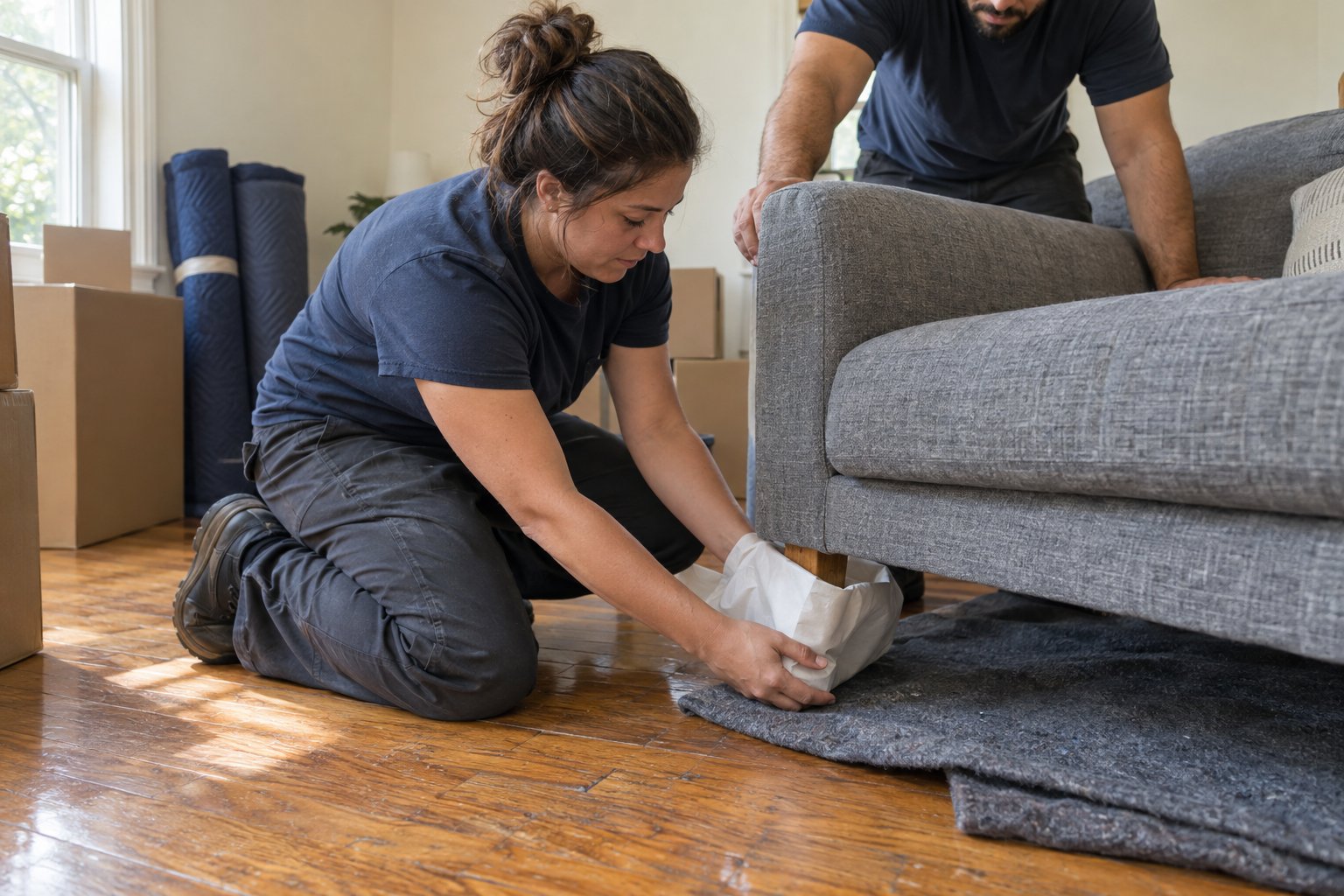
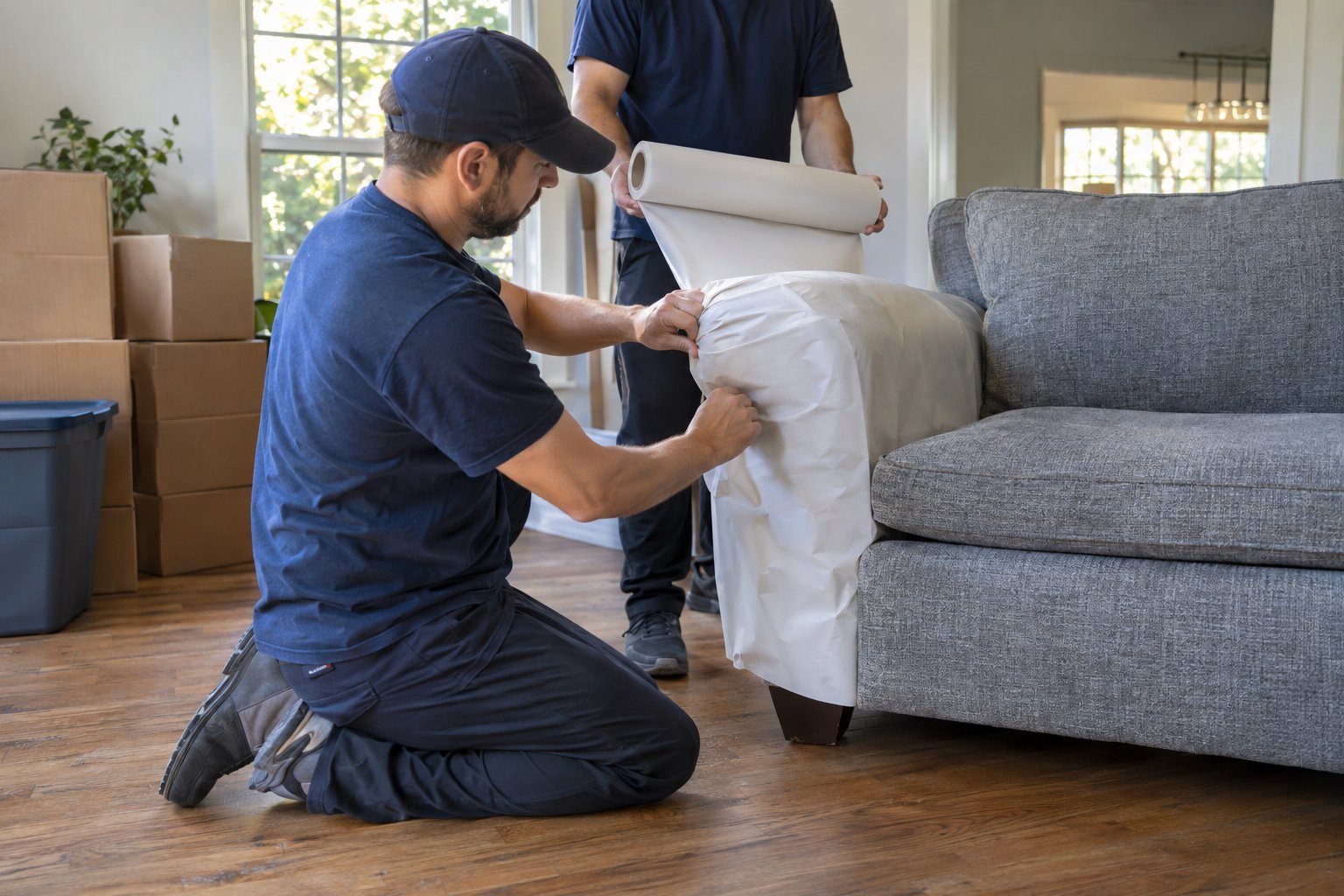
Furniture pads matter most at contact points, where one piece touches another or touches the truck wall, since that's where scuffing and dents happen during a bumpy ride. Wrap upholstered furniture and wood pieces before they go anywhere near another item, and use ratchet straps or rope to cinch large pieces to the truck's built-in rails so they can't rock even if the truck sways.
Boxes should be stacked heaviest and sturdiest on the bottom, lightest and most fragile on top, and organized by size so stacks stay flush and stable. Mixing box sizes randomly creates uneven towers that lean and eventually fall.
Load boxes in tight columns that reach from floor to ceiling wherever possible, using the tops of stable furniture (like a dresser you've already loaded) as a shelf for lighter boxes. Never stack heavy boxes on top of anything fragile, and never leave a fragile box unsupported on its own, since a single hard brake can send it sliding.
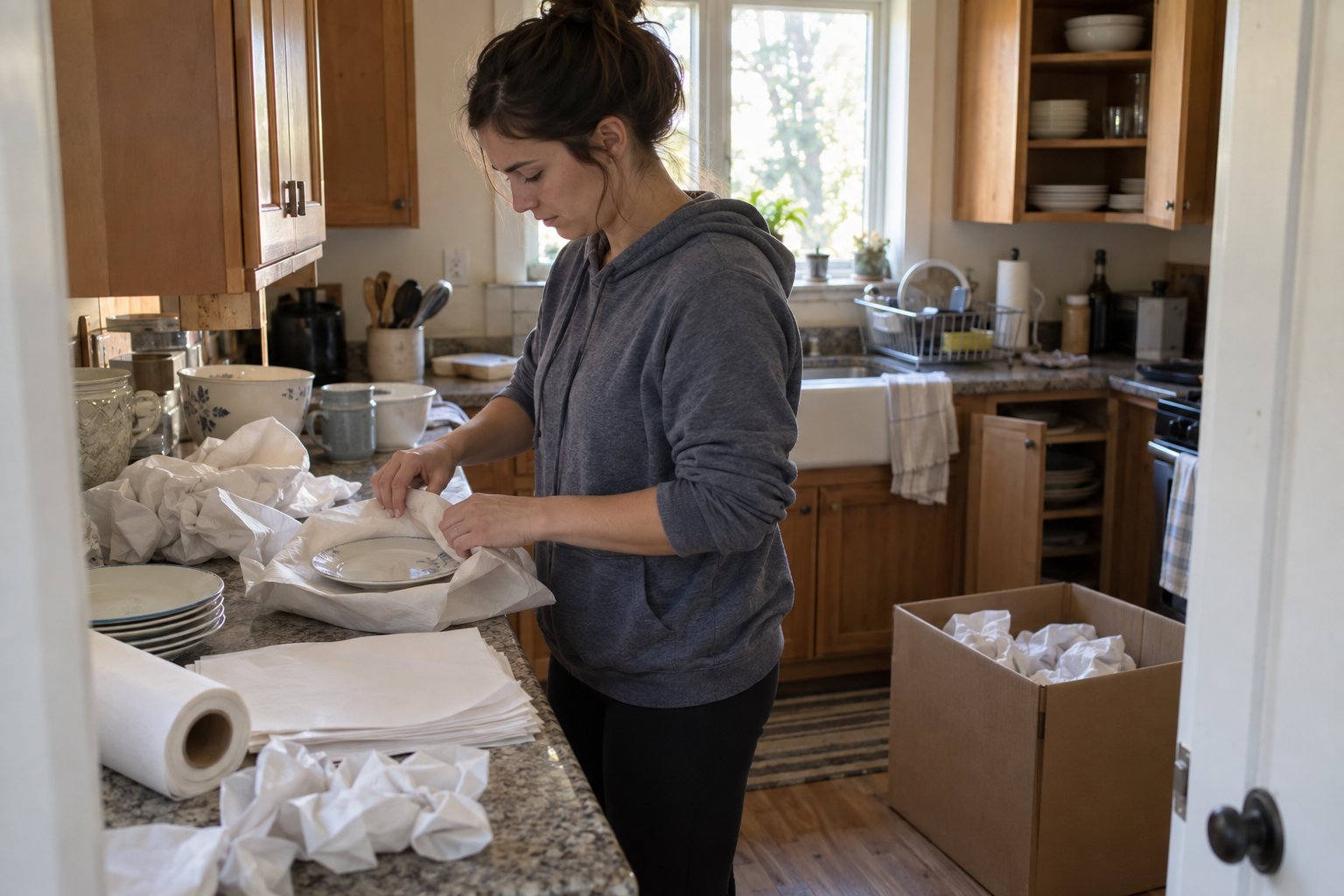
Fragile items deserve their own zone, ideally loaded last, near the truck's back doors where they're less likely to get buried under heavier things and easier to unload first without digging.
Any gap bigger than a few inches is a spot where something can shift. Use soft items like pillows, folded blankets, and bagged clothing to plug these gaps rather than leaving them empty, and rolled-up rugs or mattresses can double as padding along the truck walls.
Long, awkward items like mirrors, artwork, headboards, and mattresses do best stood on edge along the truck's side walls rather than flat on top of other things. Standing them up uses vertical space efficiently and keeps them from becoming an unstable surface for boxes to sit on.
Lamps, floor lamps, and anything with delicate protruding parts should travel in their own protected space, wrapped and cushioned, rather than wedged between furniture where a shift could snap them. Tools, yard equipment, and anything with sharp edges should be boxed or bundled so they can't puncture other items or a person unloading later.
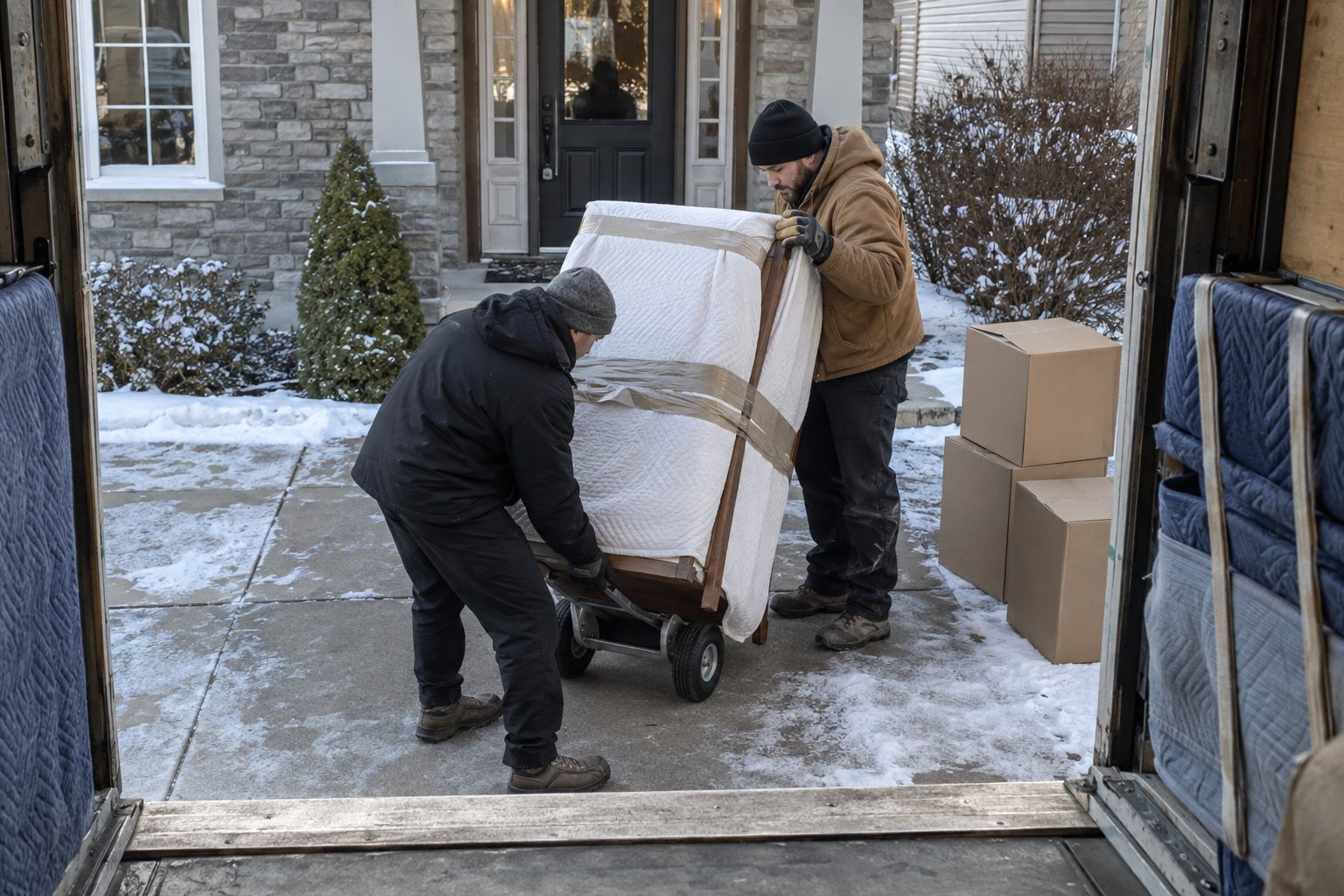
DIY loading works fine for smaller moves if you have the time, the right equipment, and at least one or two extra people to help lift. It gets riskier fast with heavy furniture, tight stairwells, or a truck that needs to be loaded precisely to fit everything in one trip.
Professional movers load trucks for a living, so they're generally faster, better at maximizing space, and less likely to damage furniture or hurt themselves in the process. If your inventory is large, your timeline is tight, or you're moving long distance where a poorly loaded truck can shift for hours before you notice, it's worth weighing the cost of a rental truck and your own labor against hiring a crew. Our guide on what a full move typically costs breaks down what professional loading and hauling adds to a moving budget so you can compare the two options directly.
If you decide to bring in help for loading day, or the whole move, a moving quote is the fastest way to see what a professional crew would cost for your specific inventory and truck size.
Before you pull the ramp up, walk through the load and check for a few things: nothing wobbles when you push on it, no box sits unsupported on an angled surface, and heavy items are secured to the truck's rails or wedged against a solid wall. If you can walk a narrow path from front to back without anything leaning into your way, the load is probably stable enough for the road.
It also helps to keep a short list of what went in last, since those are the items you'll want first at the new place. If you're still deciding when to lock in your loading and moving day, our piece on choosing a moving date covers how the calendar affects both price and crew availability, which matters if you're coordinating a truck rental around a specific window.
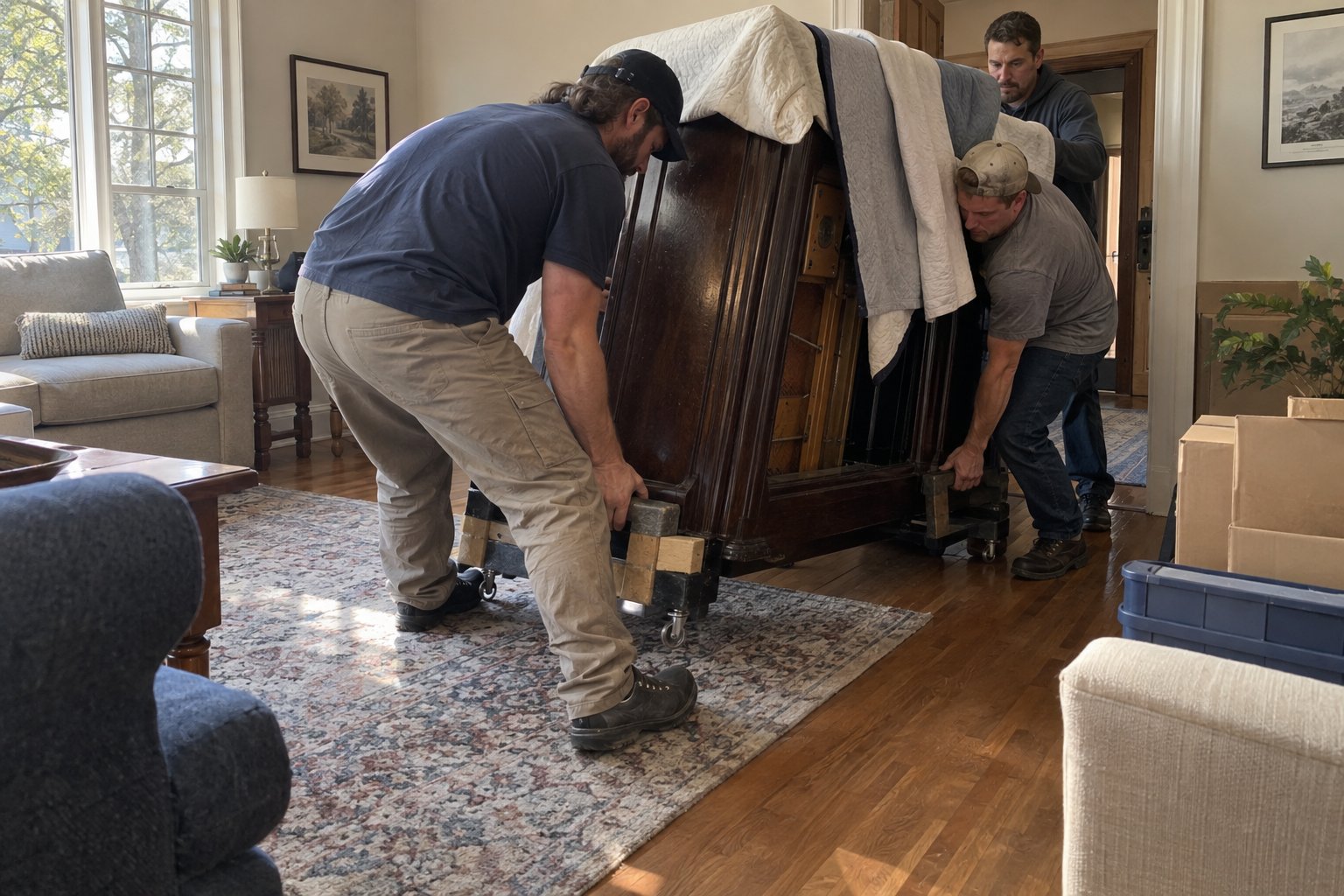
Some moves are complex enough that loading the truck yourself stops being a money-saver and starts being a liability, particularly with specialty items like pianos, gun safes, or fine art that need specific handling and equipment. In those cases, our specialty moving services page covers how trained crews handle items that a standard loading approach can't safely accommodate.
And once the truck is unloaded, tipping etiquette often comes up. Our guide on what to tip a moving crew walks through fair amounts by job size if you hired help for loading or the full move.
Whether you're loading a 16-foot rental truck yourself or handing the job to a crew, the same principles apply: heavy and rigid first, fragile and light last, and no open space left for anything to shift.
Wedge large pieces tightly against the truck wall or other furniture, use ratchet straps or rope tied to the truck's rail system, and fill any remaining gaps with soft items like blankets or pillows so nothing has room to move.
Major appliances and large furniture like dressers, sofas, and bookshelves should go in first since they form the stable base and back wall of the load. Mattresses and box springs typically go in on their edges alongside them.
Yes, as long as the furniture underneath has a flat, stable top and isn't fragile. Dressers and sturdy tables often double as a shelf for lighter boxes, but never stack anything heavy on top of upholstered or delicate pieces.
Aim for a tight, floor-to-ceiling load with minimal open space rather than a loosely packed truck. A snug load actually protects items better because there's less room for anything to shift during transit.
Hiring movers to load is usually worth it for larger households, heavy furniture, or long-distance moves where a poorly packed truck can shift for hours unnoticed. Smaller, local moves with extra hands available are more reasonable to load yourself.
From Durango to communities across Southwest Colorado, High Mountain Moving is here when you need reliable residential, commercial, or long-distance moving services. Request your free quote today.